Homemade Lincolnshire Sausages
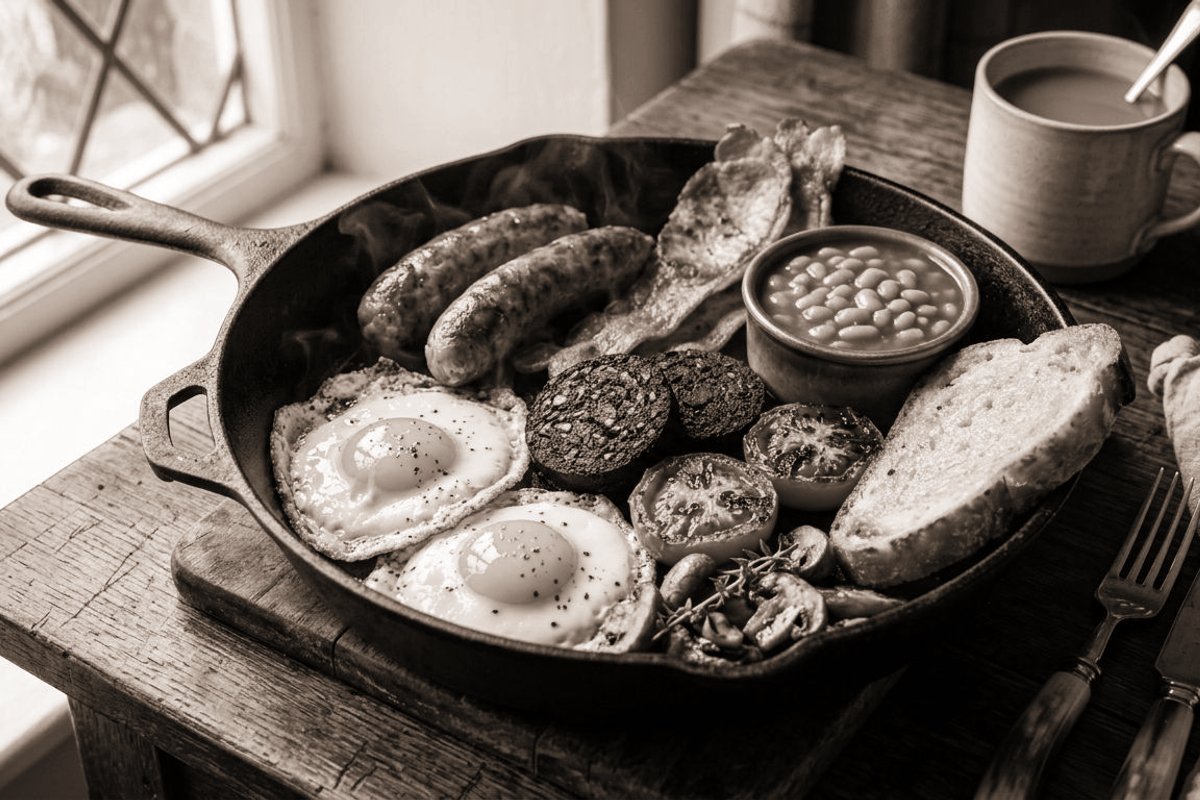
Quantities live in the recipe card.
The meat
The seasoning
The binder
The casings
- or make skinless, shaped in cling film
Doneness & Quality Checkpoints
- Chop: coarse 3–4 mm flecks, never paste; meat kept cold throughout.
- Seasoning: test-fried and adjusted before casing; sage unmistakable.
- Stuffing: plump, even links, pricked twice, twists alternating.
- Rest: 12–24 hours; dry casings; cooked to clear juices at medium-low.
Homemade Lincolnshire Sausages
Prep: 40 minutes, plus overnight rest · Cook: 20 minutes · Total: Overnight plus 1 hour · Makes 10 sausages
Ingredients
The meat
- 700 g pork shoulder, cut into 2 cm chunks, partially frozen
- 200 g pork belly or fatty pork, cut into 2 cm chunks, partially frozen (the 70/30 lean-to-fat ratio that makes a sausage juicy)
The seasoning
- 8 g fine sea salt
- 2 g finely ground black pepper
- 6 g dried sage, rubbed fine (or 15 g fresh sage leaves, very finely chopped)
- 1 g ground ginger
- 1 g ground nutmeg
- 1 g ground mace (or allspice)
The binder
- 60 g rusk or fine dry breadcrumbs
- 100 ml cold water or cold stock
The casings
- 1 length natural hog casing (about 2 metres), soaked and flushed — or make skinless, shaped in cling film
Instructions
- **Chop the meat coarse.** Working in two batches, pulse the chilled pork chunks to a coarse chop, then combine both batches in the chilled bowl. Checkpoint — the chopped meat holds distinct 3–4 mm flecks, matte and separate — like coarse gravel, not porridge. Any smearing means the meat warmed; re-chill it 15 minutes before continuing.
- **Season, hydrate, and test-fry.** Scatter the salt, pepper, sage, ginger, nutmeg, and mace over the meat and toss. Dissolve nothing: sprinkle the rusk evenly, then add the cold water gradually while mixing with your hand until the mixture is sticky and holds together when squeezed — 1–2 minutes of working. Take a small spoonful, fry it in a pan for 3 minutes, and taste: this is the only chance to adjust the seasoning before casing. Checkpoint — the mixture is sticky enough to cling to an inverted bowl when pressed, the sage's grey-green flecks are evenly distributed, and the fried test-patty tastes properly seasoned — a shade bolder than the final sausage should be, because the casing and cooking mute it.
- **Stuff the casings.** Fit the casing onto the stuffer's nozzle (or the piping bag's largest plain tip), leaving 10 cm hanging free. Feed the mixture through steadily while guiding the casing off the nozzle with two fingers — let the filling do the filling, and the casing will fill plump without bursting. Twist links every 12–15 cm, alternating twist directions so the chain holds. Prick each sausage twice with a pin. Checkpoint — each link is plump and even, the casing taut but not stretched-glassy, the twists holding firm. Overfilled sausages burst in the pan; underfilled ones wrinkle and cook dry. A little give under finger-pressure is correct.
- **The overnight rest.** Hang the sausage chain or lay it on a tray in the fridge, uncovered, overnight — 12 to 24 hours. The seasoning marries, the surface dries slightly for better browning, and the mixture firms. Checkpoint — the next day the casings feel dry to a light touch, the links are firm, and the raw sausage smells evenly of sage when a link is sniffed. Wet-surface sausages steam in the pan; dried ones brown.
- **Cook — the pan-fried test.** Cook as the proper pan-fried black pudding master's neighbour: a dry or barely-oiled pan over medium-low, 12–15 minutes, turning every 3 minutes, until deeply browned on all sides and cooked through. Checkpoint — taut, evenly browned skins; clear juices at a nick; the interior juicy and flecked with visible meat grain. Cut one open on the first batch — this is the moment the overnight rest pays.
Finish & Plate
Grilled, griddled, or pan-fried, in the Lincolnshire Sausage Fry-Up or the full English at large, with the sage-and-onion variant beside them for comparison. A homemade batch also makes the finest sausage sandwiches of the year, and the raw mixture (before casing) is the stuff of the best sausage rolls and stuffing.
Troubleshooting
| Symptom | Cause | Fix |
|---|---|---|
| Paste texture instead of flecks | Meat too warm, or over-processed | The 45-minute freeze; pulse in short bursts |
| Sausages burst in the pan | Overfilled, or unpricked, or heat too high | Finger-pressure give, two pin-pricks, medium-low |
| Dry, crumbly interior | Too little fat or binder | The 70/30 ratio; the full 60 g rusk and 100 ml liquid |
| Bland after cooking | Under-seasoned mix, no test-fry | The test patty's lesson; next batch bolder |
| Casings wrinkled and loose | Underfilled | Steadier feed; let the filling fill |
Storage, Make-Ahead & Variations
- **Storage:** raw links keep 3 days refrigerated and freeze 3 months (freeze on the tray, then bag). Cooked sausages keep 3 days — but homemade ones rarely last the first morning. - **Variation — sage-and-onion breakfast sausages:** the sibling record — the same base, the onion folded in, the sage doubled. The two recipes are one education. - **Variation — skinless Lincolnshires:** the mixture shaped into thick fingers between cling film, chilled firm, and pan-fried — for the casing-averse, and honestly excellent in the hash. - **The county note:** Lincolnshire's sausage wars (sage vs no-sage) are real civic history; this recipe takes the sage side, as the county's butchers overwhelmingly do.