Slow-Roasted Tomatoes
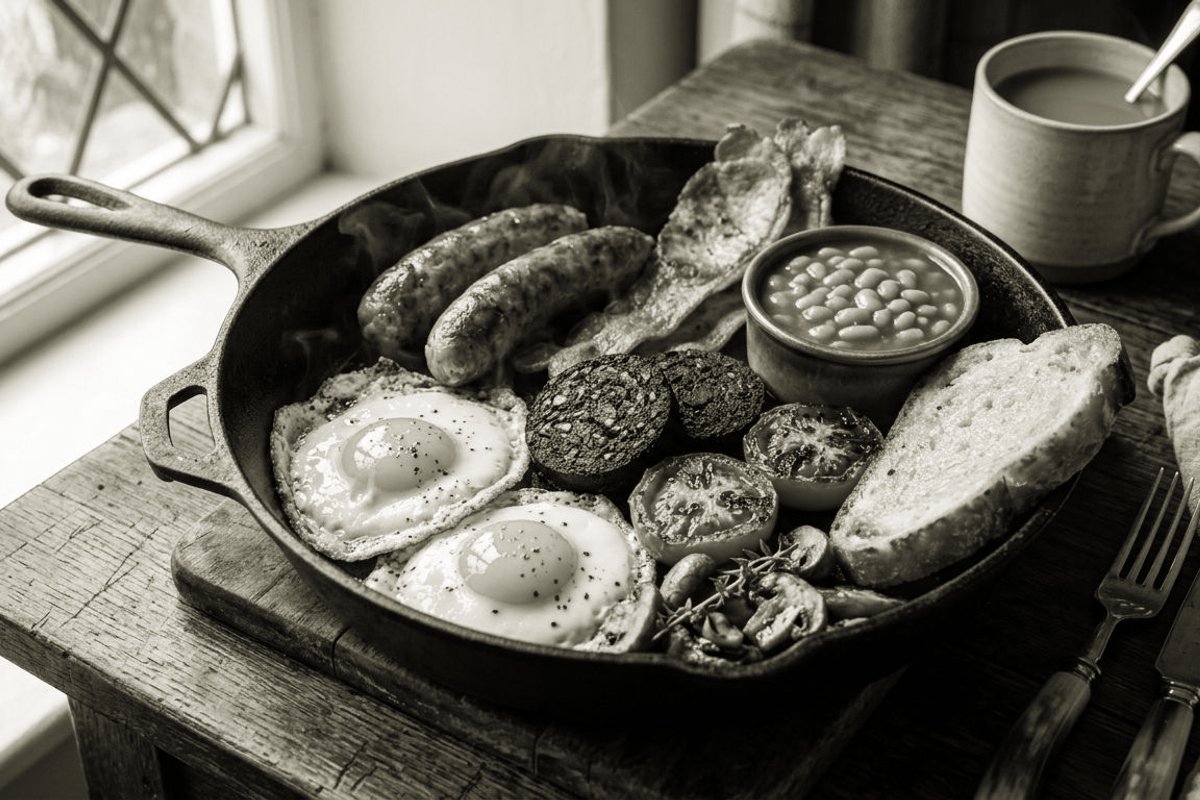
Quantities live in the recipe card.
The tomatoes
- ripe ones if the season allows; respectable ones otherwise, because the method forgives
The seasoning
- they roast sweet in their skins and squeeze out over the finished tomato)
Slow-Roasted Tomatoes
Prep: 5 minutes · Cook: 45 minutes · Total: 50 minutes · Serves 4
Ingredients
The tomatoes
- 8 medium vine tomatoes (800 g), halved through the equator — ripe ones if the season allows; respectable ones otherwise, because the method forgives
The seasoning
- 30 ml / 28 g olive oil
- 4 g fine sea salt
- 2 g soft light brown sugar
- 2 g black pepper
- 4 sprigs fresh thyme (or 2 g dried)
- 2 garlic cloves, skin-on, smashed (optional — they roast sweet in their skins and squeeze out over the finished tomato)
Instructions
- **Season and load.** After the salt-drain and blot, arrange the halves cut-face up on the tray. Drizzle the oil over, then the sugar, pepper, and a final light salt; tuck the thyme sprigs and garlic between the halves. Checkpoint — each cavity holds a small pool of seasoned oil, the cut faces are matte and dry, and the seasoning sits where the roasting will concentrate it. Crowded halves get their own second tray — space is an ingredient here.
- **Roast at 150 °C, 45 minutes.** Into the oven, middle shelf. At 25 minutes, check once: the edges should be beginning to wrinkle and the cavities to deepen. At 45 minutes, pull them when the flesh has slumped by about a third, the edges are lightly caramelised, and the cavity juices have thickened to a syrup that coats a spoon. Checkpoint — the tomato is deeply slumped, glossy, and dense — a spoon lifts a half whole, and its cavity holds syrup, not water. The edges are bronzed, never black. If the cavities still swim at 45 minutes, give 10 more; if the edges have gone dark at 35, the oven runs hot — drop 10 °C.
- **Rest in the tray, 10 minutes.** Out of the oven and left on the tray — the halves reabsorb a little of their syrup as they cool, and the garlic squeezes from its skins over them if using. Checkpoint — the tomatoes are warm-not-hot, glossy with their own syrup, and hold their shape when lifted. Serve now, or cool completely and refrigerate — they are better on day two, which almost no breakfast component can claim.
- **Land — hot on the plate, or from the fridge re-warmed.** For the Sunday plate, spoon the syrup over them and serve beside the eggs. For the weekday, re-warm 4–5 halves on a tray at 160 °C for 8 minutes. Checkpoint — the eating test: a spoonful that tastes of tomato intensified — sweet, salted, faintly thymic — with a yielding jam texture and none of the raw acidity the fresh tomato carries. It is the grilled tomato's flavour, multiplied.
Troubleshooting
| Symptom | Cause | Fix |
|---|---|---|
| Still watery at 45 minutes | Oven cool or tray crowded | Verify 150 °C; space the halves; give 10–15 more minutes |
| Leathery, dried-out halves | Over-roasted or too hot | Pull at the slumped-syrup stage; 140 °C for a longer run next time |
| Bitter edges | Oven hot or sugar skipped | The 150 °C check; the sugar buffers the caramelisation |
| Bland result | Under-salted or unripe tomatoes, uncorrected | Salt up at the end; a final squeeze of lemon lifts a flat tray |
Storage, Make-Ahead & Variations
- **The best-keeping tomato on the site:** 1 week refrigerated under a film of their oil, 3 months frozen, and — potted in sterilised jars with fresh oil — the beginnings of a preserve. They improve for 2–3 days in the fridge. - **Variation — the balsamic version:** 10 ml balsamic drizzled in the last 10 minutes — the supper-cousin, as good with the gammon steak as with breakfast. - **Variation — the chilli version:** a pinch of chilli flakes with the seasoning — the bean-pot's friend. - **The trio completed:** grilled (fast, jammy, element), pan-fried (faster, crusty, fat), slow-roasted (slowest, concentrated, make-ahead) — the fry-up's tomato doctrine in three records, one vegetable, no wrong answers.